MU still discussing possible hotel, entertainment district and student housing to enhance game-day experience

COLUMBIA, Mo. (KMIZ)
The University of Missouri is still exploring several commercial development options on university-owned property as it looks to enhance the game-day experience and provide more amenities for students, faculty and staff.
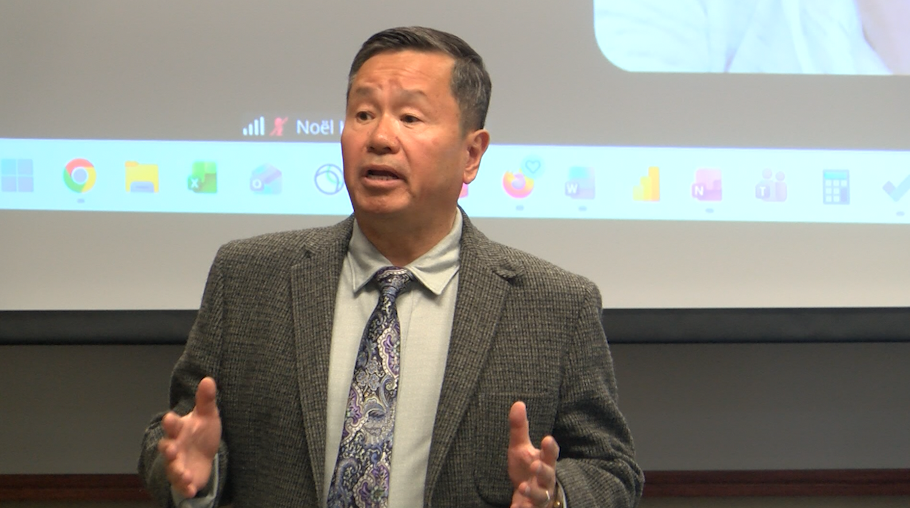
UM System President Mun Choi said during a faculty council meeting on Thursday that the university is considering an entertainment district, including a hotel near Memorial Stadium and additional student housing. However no decisions have been made, and discussions are ongoing.
“We're still in the discussion phase right now, and we are looking at a variety of different options, including entertainment district, a hotel near the football stadium, as well as housing student housing on our property because students do like to live closer to the campus in downtown,” Choi told ABC 17 News.
The university began seeking development proposals last fall, with the goal of building on ongoing renovations at Memorial Stadium and improving the experience for fans attending football games. Its bid portal closed Jan. 9, with eight properties across three designated zones identified as potential development sites.
The proposed development zones include properties in the North Campus and central business district, areas near the center of campus, and sites within the athletics complex. Potential locations include properties at Fifth and Locust streets, Stadium Boulevard and Tiger Avenue, the Hearnes Center complex and Gustin Golf Course.
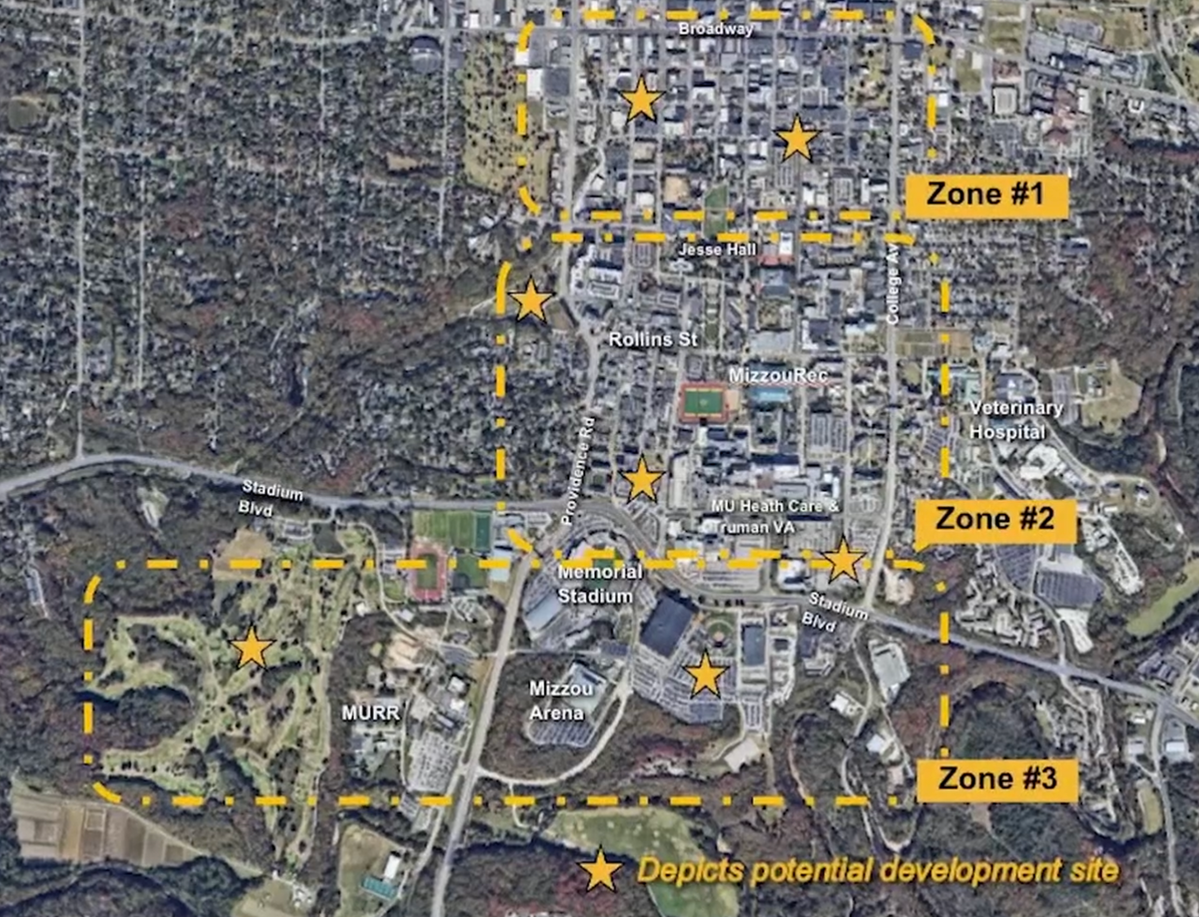
A map provided by the University of Missouri shows proposed development zones.
Choi said the effort began after the University of Missouri Board of Curators asked administrators to evaluate how effectively the university was using its property.
“It came from a conversation that we had with the Board of Curators who asked are we using all of our properties effectively? There were parcels of land that were not being used effectively. So we said, let's explore with the business community to see what kinds of opportunities there are,” Choi said.
Under the university's original bid documents, officials said they would consider selling properties in the North Campus and central business district zone while offering lease agreements for sites in the other two zones.
Choi said Thursday the university's approach is intended to attract investment while generating additional economic activity in the region.
“Our goal is to provide land and in exchange for the land to have properties come in that will be paying taxes, which is good for the region and provide more amenities for our students, faculty and staff," he said.
The university has emphasized that projects should generate revenue through upfront payments or ongoing payments while providing amenities that benefit the campus and surrounding community. Proposals also must not require the university to commit its own capital or issue or underwrite bonds to finance development.
Choi added the university has received positive feedback from downtown businesses, pointing to the role students play in supporting the local economy.
“Our students drive economic activity in this region, it makes the region more vibrant,” Choi said. “So in general, there's a lot of support for this type of activity.”
That economic impact comes as MU continues to grow its student population. Undergraduate enrollment reached 29,500 this academic year, an increase of 500 students from the previous year. The university enrolled 6,050 freshmen, 25 more than last year.
Choi said he would ideally like to see the university enroll 6,200 freshmen annually, but current enrollment is approaching a level he considers sustainable given the university's resources.
“We’re close to there. That is a sustainable a number for us given our infrastructure and the number of faculty and staff we have”
The university's overall graduation rate also rose to 68%, up from 44% in 2015.
“We are really pleased with where we are because we've seen our graduation rates at four years, six years and retention rates go up. So we want to be able to maintain that, we can accept more students, but they're not going to get the same type of experience. And our goal is to increase student success.”
The proposed developments could provide additional housing and entertainment options while supporting the university's broader efforts to improve campus life. However, officials have not announced final project selections or a construction timeline.
